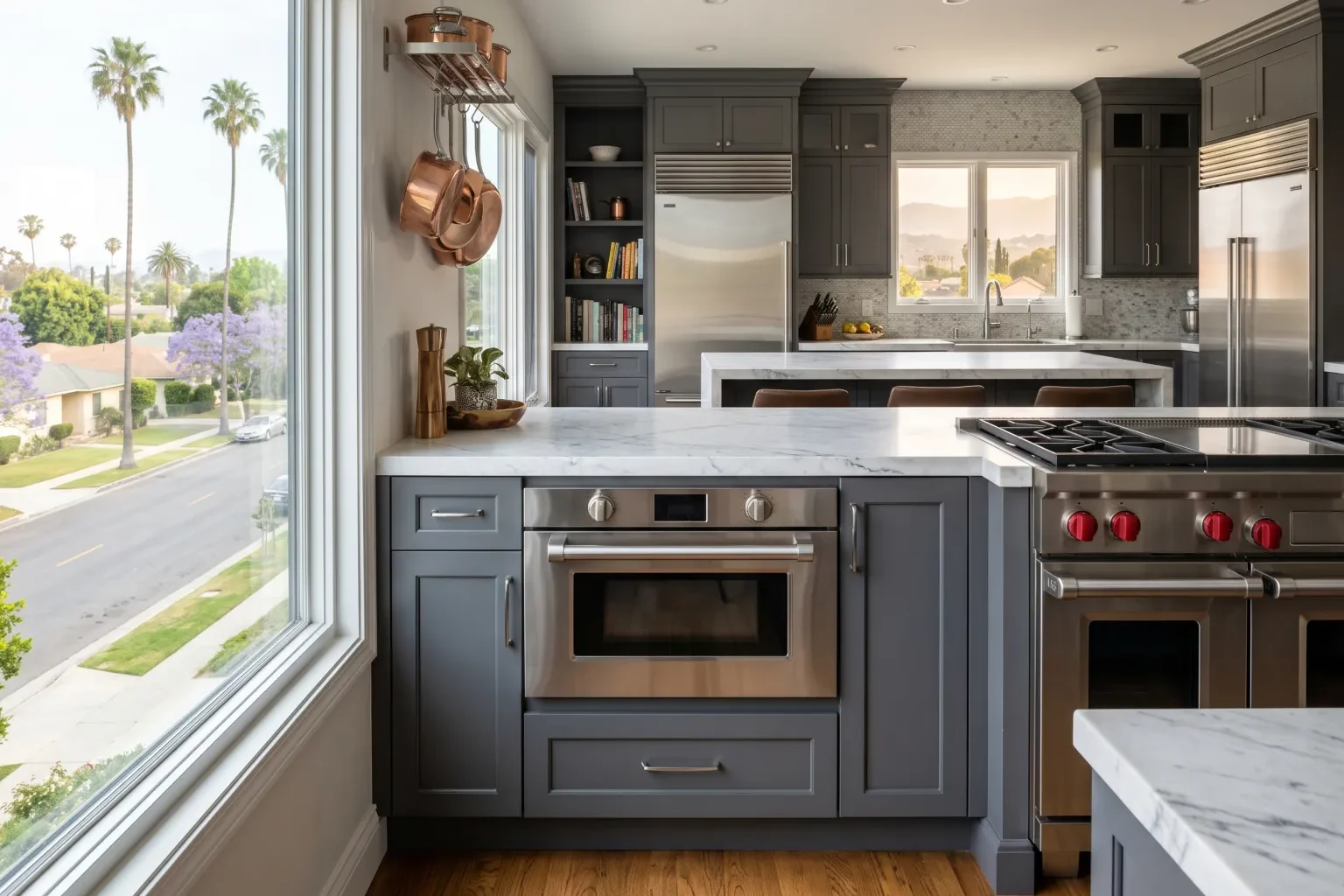



The short answer
Most microwave drawer problems come from the motorized drawer mechanism, door safety switches, the control panel, or the high-voltage heating system, and most can be repaired in place. A technician tests each system to find the actual fault, then explains whether repair or replacement is the better choice for your built-in unit.
A microwave drawer is built into the lower cabinets or an island, so a fault affects your whole kitchen. You can't swap it out the way you would a countertop model. Viking Appliance Services repairs built-in microwave drawers in homes across Los Angeles and nearby cities. We start with Viking, and we also work on Wolf and Thermador units, along with the Sub-Zero refrigeration that often sits beside them in high-end kitchens. Our technicians diagnose the specific fault, explain what they find in plain terms, and tell you whether the repair makes sense before any work begins. We are an independent service company and are not affiliated with or endorsed by any appliance brand.
Issues we fix
Microwave drawers combine a standard microwave heating system with a motorized drawer and a sealed cabinet fit. That combination produces a few problems you won't see on other microwaves. These are the symptoms homeowners call us about most often:
- Drawer won't open or close, or stops partway
- Drawer opens or closes on its own, or reverses when it meets light resistance
- Grinding, clicking, or straining noises when the drawer moves
- Unit runs, light and fan on, but food doesn't heat
- Heating that is uneven or much weaker than it used to be
- Control panel unresponsive, keys that don't register, or a blank display
- Error codes or flashing messages on the display
- Unit trips a breaker or blows a fuse when it starts
- Sparking, arcing, or a burning smell inside the cavity
- Interior light or cooling fan not working
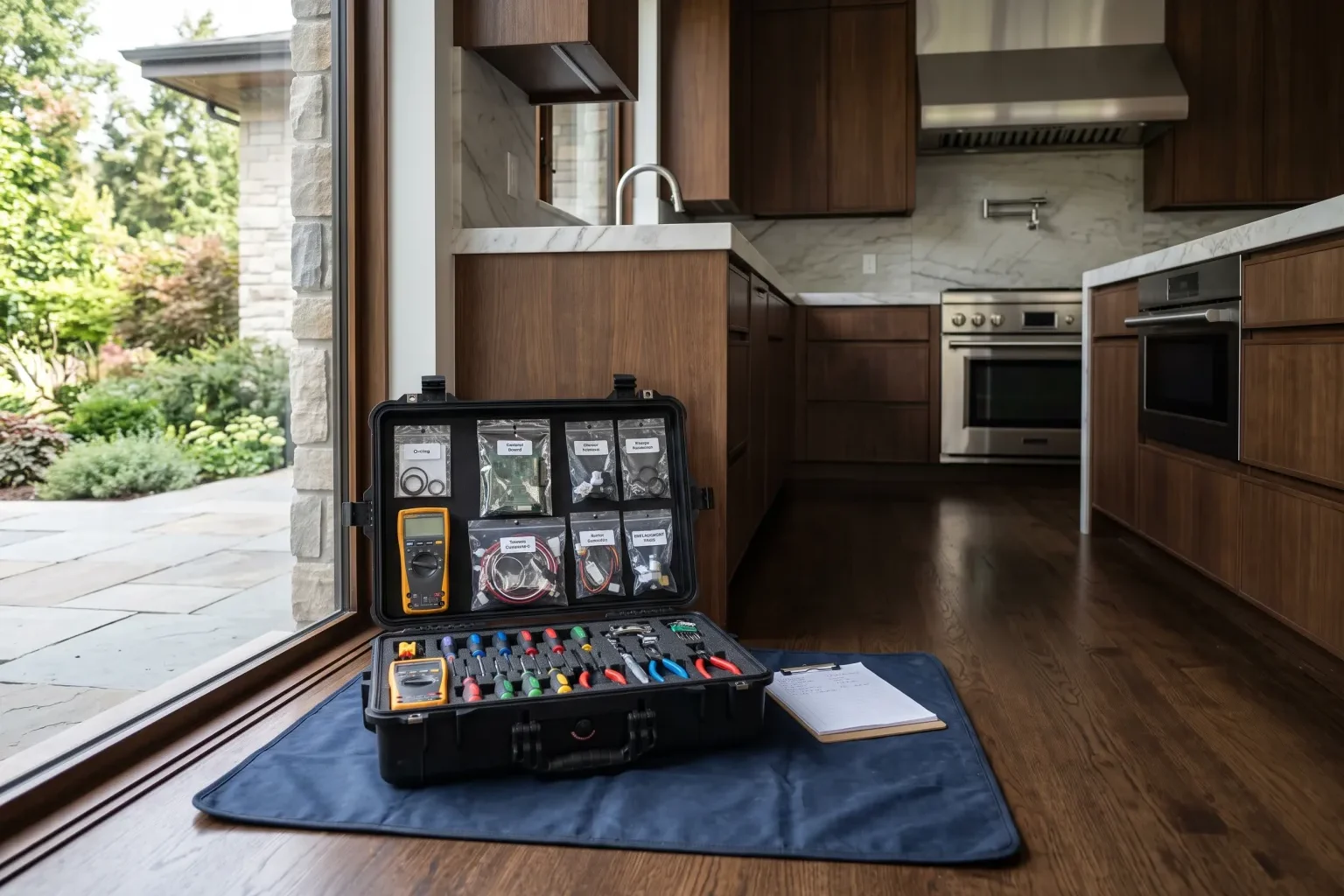
What our technician checks on a built-in unit
We start by confirming the symptom and reading any error codes. Then we check the drawer system: the drive motor, gear rack, slides, and the sensors that tell the control board where the drawer is. A misaligned rack, a worn gear, or debris in the track can make a drawer stall or reverse. Fixing these early keeps the motor from wearing out.
Next we test the door interlock switches. These safety switches have to confirm the drawer is fully closed before the unit will heat, and a failing switch is a common reason a microwave runs without cooking. If the switches check out, we test the heating circuit: the magnetron, high-voltage capacitor, diode, and transformer, plus related fuses and thermal cutoffs. This work requires safely discharging stored voltage, which is one reason homeowners should not open the cabinet themselves.
Finally, we look at the control board and touch panel, the cooling fan, and the installation itself. That includes ventilation clearances, the electrical supply, and whether the unit sits level in its cutout. A drawer that is racked even slightly in custom cabinetry can bind and strain the mechanism.
How Viking, Sub-Zero, Wolf and Thermador differ
Viking, Wolf, and Thermador all offer microwave drawers, and several premium drawers share similar underlying designs. Their basic failure points overlap: drawer drive components, interlock switches, touch controls, and heating parts. The differences show up in model-specific control boards, trim and front panels, mounting brackets, and how much of the unit can be serviced without removing it from the cabinet.
On Viking drawers, we pay close attention to drawer travel and control panel response. Wolf units are often installed beside Wolf ovens and ranges in a matched suite, so trim fit and alignment matter when we reinstall. Thermador drawers have their own control layouts and error displays that we interpret by model. Sub-Zero focuses on refrigeration, but its columns and undercounter units frequently share an island or cabinet run with a microwave drawer. We keep the surrounding finishes and clearances in mind on every visit. In every case, we identify the exact model and serial number so we order the correct parts the first time.
Tell us what your appliance is doing.
Repair or replace a high-end microwave drawer
In most cases, repairing a premium microwave drawer is the practical choice. The unit is sized to a specific cabinet opening, and a replacement may not match the cutout, trim, or finish of the rest of your kitchen. Problems like a worn drive gear, a failed door switch, or a bad fan are usually straightforward repairs.
Replacement starts to make sense when several major components have failed at once, when parts for an older model are no longer available, or when the cavity or door seal is damaged in a way that affects safe operation. If we reach that point, we'll explain why. We'll also point out what to check so a new unit fits your existing opening.
What affects the cost of repair
We can't quote a repair before diagnosing it, because the same symptom can have very different causes. These are the main factors:
- The fault itself. A sensor or switch replacement is a smaller job than a control board or heating component.
- Parts. Model-specific boards and drawer assemblies vary in cost and availability.
- Access. Units set tightly into custom cabinetry or islands may need careful removal and reinstallation.
- Additional findings. Wiring damage or installation issues uncovered during diagnosis can add to the scope.
How a service visit works
When you contact us, tell us the brand, the model if you have it, and what the drawer is doing. Once we arrive, the technician confirms the problem, runs diagnostics, and explains the cause and the recommended repair before starting any work. Nothing proceeds without your approval.
If the part is on hand, many repairs are finished during the same visit. If a model-specific part has to be ordered, we schedule a return visit to install it. Before leaving, we test the drawer's full open-and-close cycle and its heating performance, and we confirm the unit sits properly in your cabinetry.