


The short answer
Most wine cooler problems, including warm or uneven zones, frost, leaks, noise and error codes, come from a fixable part such as a fan, sensor, control board, door seal or blocked drain. On a high-end built-in unit, repair usually makes sense unless the sealed system has failed on an older model or parts are no longer available.
A built-in wine cooler protects bottles that took years to collect, so a warm zone, a dripping cabinet, or a compressor that never shuts off is worth fixing before it affects the wine. Viking Appliance Services repairs built-in and undercounter wine storage in Los Angeles and nearby cities. We work mainly on Viking units, along with Sub-Zero and Thermador wine storage, and we often service them in kitchens built around Wolf cooking equipment. We are an independent repair company, not affiliated with any of these brands. This page covers the problems we see most, what our technician checks, how repair compares with replacement, and how a visit works.
Issues we fix
Wine coolers usually show trouble gradually. A zone drifts a few degrees, the unit runs longer than it used to, or water shows up where it shouldn't. If you notice any of the following, it's worth a look before the temperature swings start affecting your bottles.
- Not cooling, or one zone running warmer than its setting
- Uneven temperature between the top and bottom of a zone
- Frost or ice building up on the rear wall or evaporator cover
- Water pooling inside the cabinet or leaking onto the floor
- Condensation on the glass door or around the frame
- Compressor running nonstop, or short-cycling on and off
- Clicking, buzzing, rattling or a loud fan
- Error codes or alarms on the display
- Interior lights, display or touch controls not working
- Door not sealing, sagging, or not closing on its own
What our technician checks on a built-in unit
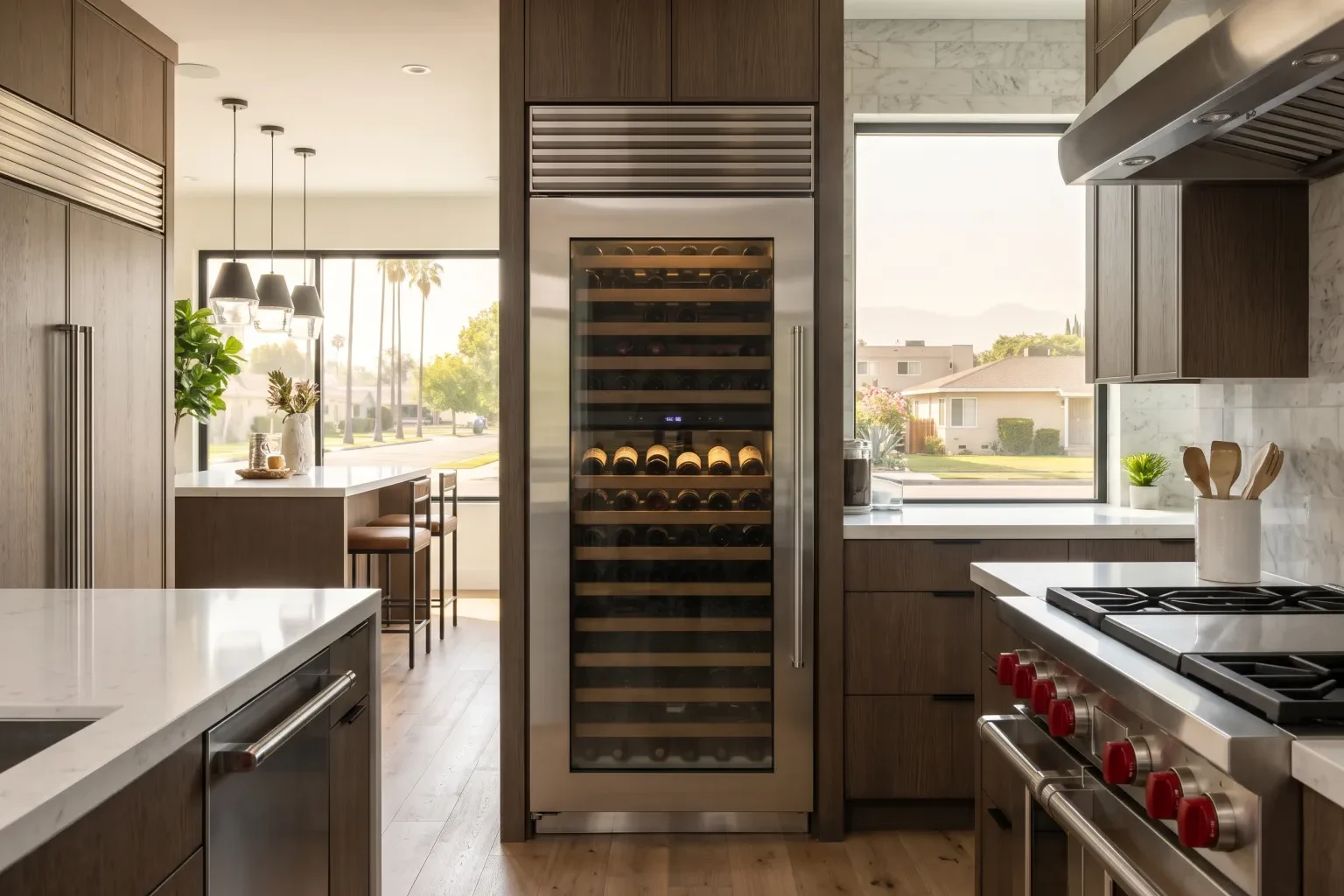
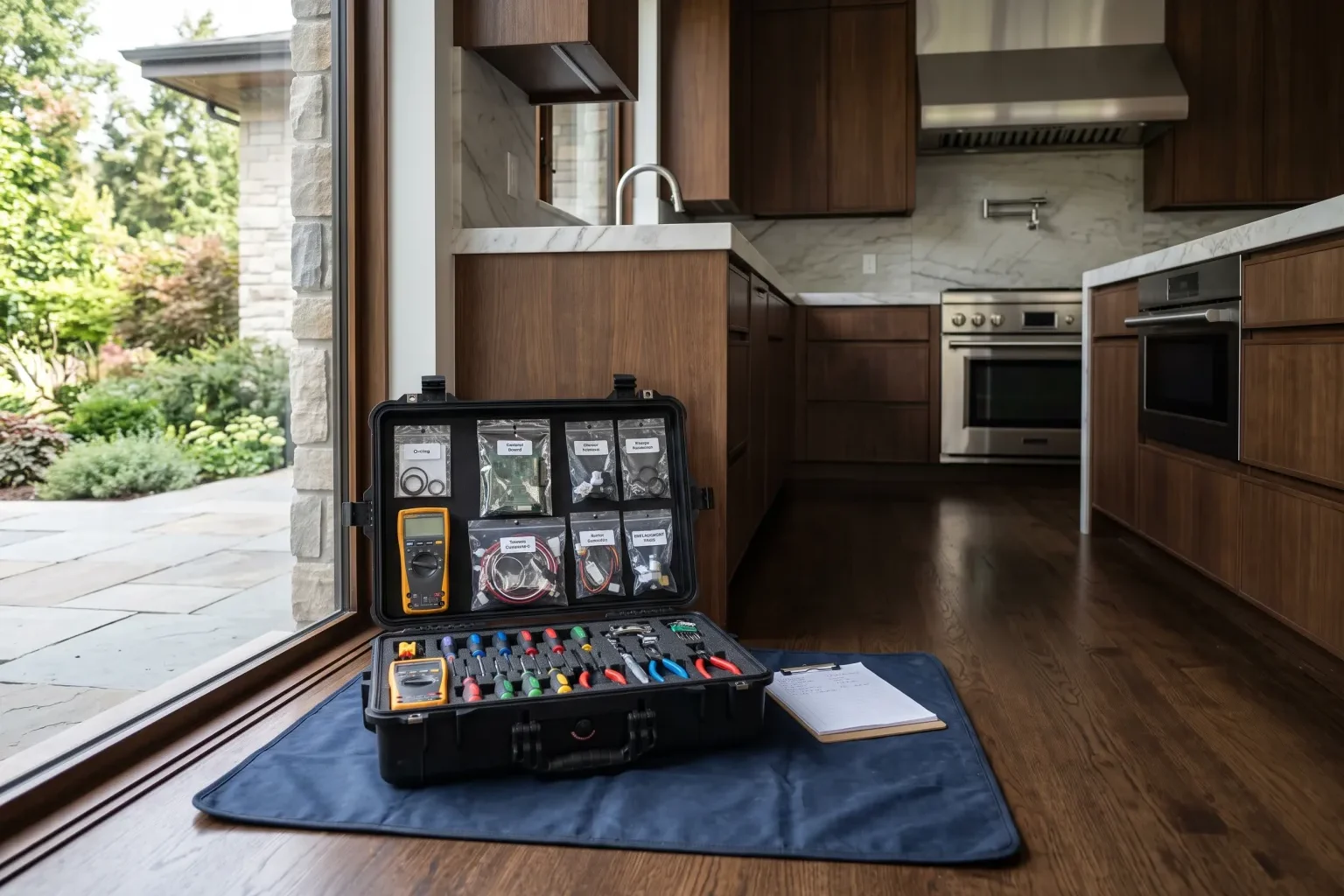
Built-in and professional-style wine units are designed to sit flush in cabinetry. They breathe through the front grille instead of open space behind them, so a clean airflow path matters more than it does with a freestanding cooler. Our technician starts with the basics: the temperature setting in each zone, actual readings taken with a separate thermometer, and any stored error codes.
From there we check the condenser coil and condenser fan for dust and lint, the evaporator fan and evaporator coil for ice, and the defrost system if the unit has one. We also test the temperature sensors and control board, inspect the door gaskets and hinges for gaps, and clear the drain line and drain pan. If the evidence points to the sealed system, meaning the compressor, refrigerant or a leak, we confirm it before recommending anything, because that is the most involved repair.
Local conditions matter too. Inland neighborhoods and valleys get much hotter in summer than areas near the coast, and fall Santa Ana winds can bring hot, dry spells. A unit in a warm garage, a sunny room or a tight cabinet in the Valley works harder than the same model in a cool coastal kitchen. We'll tell you if placement or ventilation is part of the problem.
How Viking, Sub-Zero, Wolf and Thermador units differ
Viking undercounter wine units are common in kitchens that use a Viking range. On these, we often trace problems to condenser airflow through the front grille, fan motors, door alignment and temperature sensors. Many Viking units have two zones, so a fault can show up in one zone and not the other.
Sub-Zero makes both undercounter and full-height wine storage, often with dual zones and separate controls. These are complex units, so diagnosis tends to focus on the control system, sensors, evaporator fans and the drain path. Wolf is the cooking side of the same company and does not make wine coolers. In a Wolf kitchen, the wine unit is usually a Sub-Zero, and we service the whole setup.
Thermador wine columns are tall, fully integrated units that sit behind custom panels. They are often installed next to a matching refrigerator or freezer column. Because the panel and cabinetry hide most of the unit, access is a bigger factor. Common issues include sensor and control faults, fans and door seal problems.
Tell us what your appliance is doing.
Repair or replace a high-end wine cooler?
For most built-in units, repair is the practical choice. Fans, sensors, gaskets, hinges, drain parts and many control boards can be replaced without pulling the unit. A replacement often needs a model that fits the same cutout and accepts your existing panel, and that can limit your options.
Replacement is worth a serious look when the compressor or sealed system has failed on an older unit, when key parts have been discontinued, or when the cabinet itself is damaged or rusted. We'll explain what failed, what the repair involves and which parts are available, so you can decide with the full picture.
What affects the cost of a repair
We don't quote a number until we've diagnosed the unit, because a few factors drive the cost. The first is the fault itself. Clearing a clogged drain or cleaning a condenser is very different from replacing a control board or repairing a refrigerant leak.
The second is parts. Brand-specific boards and sealed-system components cost more than common fans and gaskets, and some need to be ordered. The third is access. A unit behind a custom panel or wedged into tight cabinetry may need to be pulled out carefully to protect the woodwork and flooring, which adds time. We explain each of these before any work begins.
How a visit works
When you contact us, tell us the brand, the model number if you can find it, and what you're seeing. Any error codes and whether the problem affects one zone or both are especially helpful. That lets the technician bring the most likely parts.
At the appointment, the technician diagnoses the unit and explains the cause in plain terms. You'll get a recommendation and the cost before any repair starts. If the parts are on the truck, we can often finish the same visit. If a part has to be ordered, we'll schedule a return trip. Before a visit, it helps to move the bottles from the affected zone to a cool, dark spot and clear the area in front of the unit.